
THE GLASS MONOLITH
The Glass Monolith is a compelling memoir about identity, isolation, and the lifelong search for understanding and acceptance. It recounts the struggles of a man who spent much of his life feeling different, facing misunderstandings, personal accusations, and obstacles that affected his education, relationships, and career.
After years of searching for answers, he discovers in middle age that he has Asperger’s Syndrome, an autism-related condition that explains many of the challenges he experienced growing up and interacting with others. This late diagnosis brings new perspective to his past, revealing how an undiagnosed condition shaped his experiences and sense of belonging.
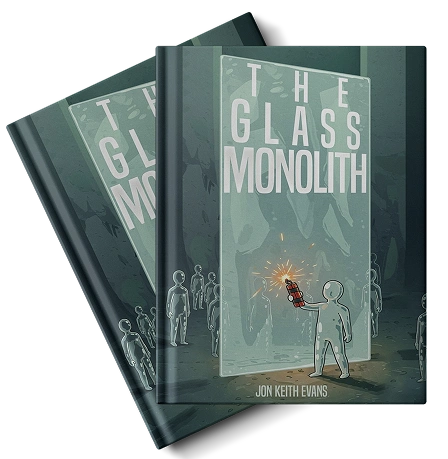
The memoir also examines how race added another dimension to his struggles. As a Black man navigating life with an undiagnosed condition, he faced additional social judgments and barriers that complicated his efforts to be understood and accepted. Through the metaphor of the glass monolith, the book illustrates the invisible divide between neurodivergent and neurotypical individuals and the difficulty of connecting across it.
Beyond recounting personal hardships, The Glass Monolith highlights the importance of early diagnosis, educational support, and greater awareness of neurodiversity. It is ultimately a story of perseverance, self-discovery, and resilience that encourages readers to look beyond assumptions and embrace empathy, understanding, and acceptance.
BOOK EXCERPTS

People frequently talk about hitting a “Glass Ceiling”!
I, on the other hand, would hit a Glass Monolith. Most insidiously, it wasn’t until the age of 47 that my Glass Monolith could be identified.
At least you could see the monolith depicted in 2001: A Space Odyssey. In the period after this Author finally finished my nightmarish Undergraduate curriculum, my problems would not be completely finished. That Glass Monolith was Asperger’s Syndrome—a kissing cousin to Autism! I also suspected Hyperlexia ONLY because ABC/WLS-TV presented a news segment about it. At the time of my diagnosis, I asked my doctors about it; and yes, that suspicion was also confirmed! It was as if I would hit a Glass Monolith—not just a glass ceiling!
Another reason for subtitling this book “The Glass Monolith” was that there was a perpetual barrier between This Author and not only normal social functioning, but also a viable career. I could understand it if I were younger. In my adulthood, I thought that I could suck it up and buckle down. My persuasive ability was always a joke.
I was also made aware that I was different, or perceived as being different from my fellow Black Americans-mainly because of my speaking voice. Some thought highly of my voice. Others thought that either Gay, Obnoxious, or odd in some kind of way.